Description
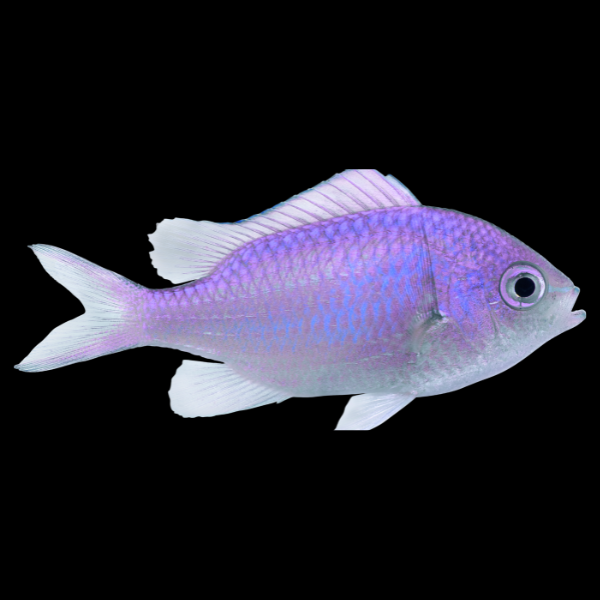
Purple Chromis (Chromis albomaculata)
Overview
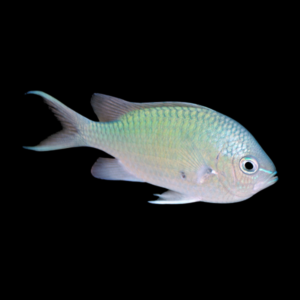
The Purple Chromis is a rarer, attractive chromis species with a shimmering lavender-to-purple body often highlighted by faint lighter spotting (the name albomaculata means “white-spotted”). Reaching around 9–10 cm (3.5–4 inches), it is a peaceful schooling damselfish that adds both movement and a unique splash of colour to reef aquariums. Like other chromis, it thrives when kept in groups and is well-suited for active community reef systems.
Origin
Native to the Western Pacific Ocean, particularly the Philippines, Indonesia, Micronesia, and surrounding regions. Found in small shoals above coral reefs and lagoons, where it feeds on plankton.
Feeding
A planktivorous omnivore that readily accepts prepared foods in aquariums:
-
High-quality marine flakes and micro-pellets
-
Frozen mysis shrimp, cyclops, and enriched brine shrimp
-
Finely chopped seafood for variety
-
Spirulina and algae-based foods to maintain health and colour
Feed 2–3 times daily.
Tank Mates
The Purple Chromis is peaceful and pairs well with a wide range of reef-safe species:
-
Clownfish
-
Gobies and blennies
-
Small wrasses
-
Cardinalfish
-
Other chromis species
Avoid large aggressive predators, which may prey on them.
Aggression
Peaceful. Best kept in groups of 5 or more to encourage natural shoaling behaviour. In smaller numbers, dominant individuals may bully weaker ones, as is typical with many chromis.
Experience Level
Beginner-friendly. Hardy, adaptable, and easy to feed, though slightly less common in the trade than Blue-Green or Black Axil Chromis.
Water Parameters
-
Temperature: 24–28°C (75–82°F)
-
pH: 8.1–8.4
-
Salinity: 1.020–1.025 SG
-
Hardness (dKH): 8–12
-
Tank Size: Minimum 30 gallons (115L) for a small group; larger aquariums are ideal for shoals
Provide open water for swimming with plenty of branching coral or rock for shelter.
Reef Compatibility
Reef safe. Will not harm corals or invertebrates and are an excellent schooling species for reef aquariums.