Description
Horseshoe Crab (Limulus polyphemus)
(Also known as Atlantic Horseshoe Crab, American Horseshoe Crab, or King Crab)
Overview
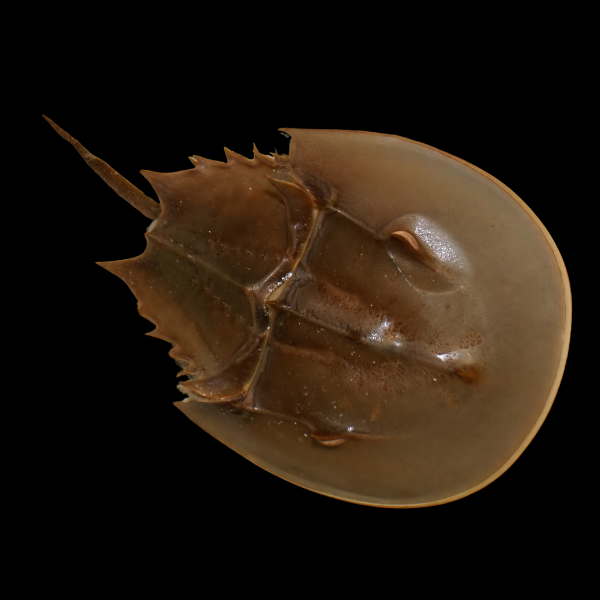
The Horseshoe Crab (Limulus polyphemus) is an ancient and fascinating marine arthropod, often referred to as a “living fossil” — having remained virtually unchanged for over 450 million years. Despite its name, it is not a true crab, but more closely related to spiders and scorpions. Recognisable by its hard, domed carapace, spiny tail spine (telson), and multiple pairs of legs, this species plays an important ecological role as both a substrate cleaner and sand sifter. While captivating, Horseshoe Crabs grow very large and require specialised care, making them suitable only for experienced aquarists with very large marine systems.
Origin
Native to the western Atlantic Ocean, including the Gulf of Mexico and eastern coast of North America, from Maine to the Yucatán Peninsula. Found primarily in shallow coastal waters, sandy lagoons, and estuaries, where they burrow into soft substrates searching for food.
Feeding
Horseshoe Crabs are omnivorous scavengers, feeding primarily on benthic organisms and detritus. In captivity, they require a diet rich in protein and organic material. Feed several times weekly with:
-
Mysis shrimp, krill, or chopped clams
-
Marine pellets and sinking wafers
-
Detritus, leftover food, and organic debris from the substrate
-
Occasional algae-based supplements
They use their legs and mouth appendages to sift sand and locate buried food. A deep, soft substrate is essential for natural foraging behaviour.
Lighting
Low to moderate lighting. Horseshoe Crabs do not rely on light for feeding or activity. Provide subdued illumination and shaded areas to mimic their natural, shallow coastal environment.
Water Flow
Moderate, gentle flow. Ensure adequate oxygenation and stable circulation without excessive current that could disturb the substrate or flip the crab.
Placement & Habitat Setup
-
Provide deep sandy substrate (7–10 cm / 3–4 inches) for burrowing and foraging.
-
Avoid sharp rocks or coarse gravel, which can damage the carapace or legs.
-
Ensure the tank is large enough for movement and full burrow cycles.
-
Keep the environment well-oxygenated and free of debris buildup.
Tank Mates
Caution required. Compatible with:
-
Peaceful, slow-moving fish (gobies, blennies, jawfish)
-
Non-aggressive invertebrates (snails, cucumbers, brittle stars)
Avoid:
-
Predatory fish (triggers, puffers, large wrasses)
-
Crustaceans that may nip at legs or eyes
-
Sharp rock structures that could trap or injure the crab
Aggression
Peaceful. Horseshoe Crabs do not attack other tank inhabitants but may unintentionally disturb corals or rockwork while burrowing.
Experience Level
Advanced. Limulus polyphemus requires very large aquariums, deep sand, and excellent water quality. Most specimens are better suited to public aquariums or large, open marine systems. Juveniles can adapt to home tanks but often outgrow them quickly.
Water Parameters
-
Temperature: 22–27°C (72–81°F)
-
pH: 8.1–8.4
-
Salinity: 1.024–1.026 SG
-
Hardness (dKH): 8–12
-
Ammonia / Nitrite: 0 ppm
-
Nitrate: <10 ppm
-
Tank Size: Minimum 500 gallons (1,900L) for adult specimens; 200 gallons (750L) for juveniles
Stable salinity and oxygen levels are essential, as Horseshoe Crabs are sensitive to rapid environmental fluctuations.
Lifespan & Size
-
Size: Up to 60 cm (24 inches) across including tail spine
-
Lifespan: Up to 20 years in the wild; typically 5–10 years in captivity with proper care
Reef Compatibility
Not reef safe. While peaceful, Horseshoe Crabs can dislodge rocks, overturn corals, and disturb substrate-dwelling invertebrates during feeding. Best kept in fish-only or specialised species tanks with soft sand and minimal rockwork.
⚠️ Important Note
Due to their large adult size and deep-sand habitat requirements, Horseshoe Crabs are not suitable for most home aquariums. Many individuals are sold as juveniles but quickly outgrow standard tanks. Only advanced aquarists with spacious systems or public aquarium setups should attempt long-term care.