Description
Arrowhead Crab (Stenorhynchus seticornis)
(Also known as Spider Crab, Coral Guard Crab, or Arrow Crab)
Overview
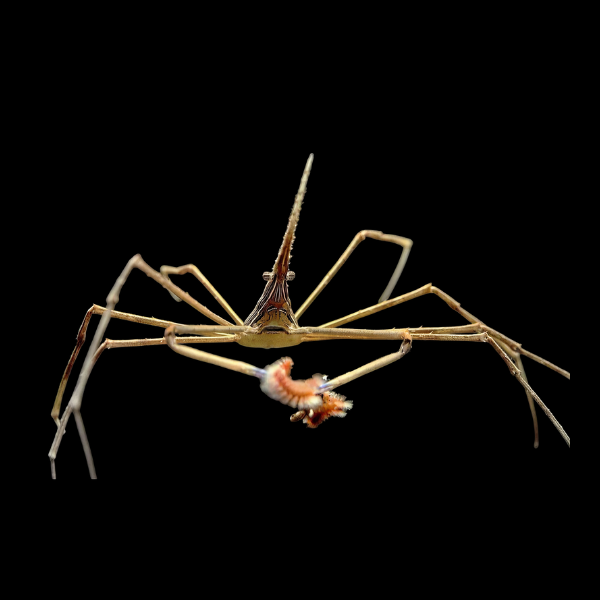
The Arrowhead Crab (Stenorhynchus seticornis) is a striking and unusual marine invertebrate known for its long, spindly legs and distinctive triangular, arrow-shaped carapace. Its intricate, spider-like appearance and inquisitive behaviour make it a fascinating addition to marine aquariums. Typically bronze, brown, or gold with bright white or blue markings, the Arrowhead Crab is hardy and highly active — spending much of its time perched among live rock or coral branches, scavenging for leftover food, detritus, and small invertebrates. While useful as a cleaner, it can display territorial or opportunistic behaviour, so careful tankmate selection is essential.
Origin
Native to the Caribbean Sea, Gulf of Mexico, and Western Atlantic Ocean. Found on coral reefs, rocky ledges, and seagrass beds, often hiding in crevices during the day and emerging at night to forage.
Feeding
An omnivorous scavenger, the Arrowhead Crab feeds on leftover food, small invertebrates, and detritus. In captivity, it will adapt readily to a varied diet. Feed 3–4 times per week with:
-
Mysis shrimp or finely chopped seafood
-
Sinking pellets or algae wafers
-
Dried seaweed (nori)
-
Occasional meaty treats such as clam or krill
While they are efficient cleaners, supplemental feeding helps prevent predatory behaviour toward tankmates or beneficial microfauna.
Lighting
Low to moderate lighting. Prefers shaded or dimly lit areas of the tank, mimicking its natural reef crevice habitat. It will often rest upside down under ledges or within coral branches during the day.
Water Flow
Moderate, variable flow. Provide alternating currents that help maintain oxygenation and simulate reef movement without dislodging the crab from its perch.
Placement & Habitat Setup
-
Provide ample live rock and hiding crevices for shelter and foraging.
-
Secure coral or rock structures — their long legs allow them to climb and explore.
-
Avoid coarse or sharp rockwork that could injure delicate limbs.
Tank Mates
Semi-aggressive / reef safe with caution. Compatible with:
-
Peaceful, medium-sized reef fish (tangs, blennies, clownfish, etc.)
-
Snails, urchins, and most shrimp (with observation)
-
Other crustaceans if sufficient space and food are available
Use caution with:
-
Tiny shrimp (e.g., sexy shrimp, anemone shrimp) — may be preyed upon
-
Small gobies or sleeping fish — may be harassed at night
-
Large, aggressive fish (triggers, puffers, wrasses) that may attack the crab
Aggression
Semi-aggressive. Stenorhynchus seticornis is territorial toward other crabs and may prey on small shrimp or weakened fish if underfed. It is best kept singly and provided with regular food to curb aggression.
Experience Level
Intermediate. While hardy and adaptable, the Arrowhead Crab’s opportunistic nature requires careful management and observation in mixed reef environments.
Water Parameters
-
Temperature: 24–27°C (75–81°F)
-
pH: 8.1–8.4
-
Salinity: 1.024–1.026 SG
-
Ammonia / Nitrite: 0 ppm
-
Nitrate: <10 ppm
-
Tank Size: Minimum 75 litres (20 gallons) per crab; larger tanks preferred for stability and territory
Lifespan & Size
-
Size: Up to 10–12 cm (4–5 inches) leg span
-
Lifespan: 2–4 years in captivity with proper care and diet
Reef Compatibility
Reef safe with caution. The Arrowhead Crab contributes to the aquarium’s cleanup crew by consuming detritus and bristleworms but may occasionally nip at polyps, small shrimp, or delicate coral tissue. Best suited for fish-only or mixed invertebrate tanks with robust corals and plenty of live rock for exploration.
Interesting Fact
The Arrowhead Crab’s elongated rostrum and long limbs allow it to reach deep into coral crevices to catch bristleworms and leftover food, making it an excellent pest-control species in moderation.