

Description
Overview
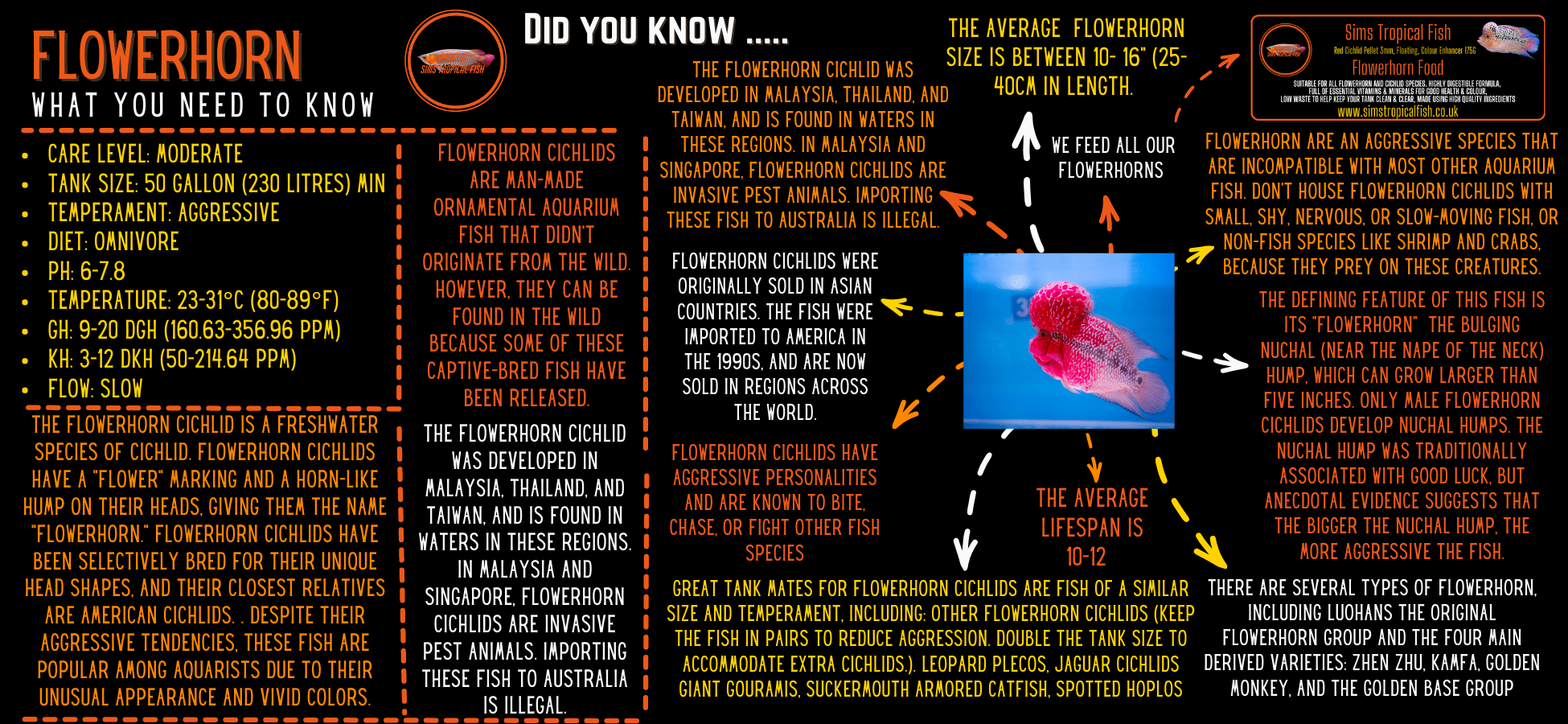
Flowerhorn cichlids are man-made hybrids, selectively bred from various Central American cichlid species. They are famous for their bright colours, bold markings, and distinctive nuchal hump (kok) on the forehead, which develops more prominently in males as they mature. At around 8 cm, a sub-adult male is entering its colouring-up stage and beginning to show personality and territorial behaviour. Flowerhorns are intelligent, interactive fish, often recognising and responding to their keepers.
Origin
Flowerhorns do not exist in the wild. They were first developed in Malaysia and Taiwan in the late 20th century, and are now bred worldwide in many colour and pattern variations.
Feeding
Flowerhorns are omnivorous with a heavy emphasis on protein. A varied diet ensures health, growth, and vibrant colour:
-
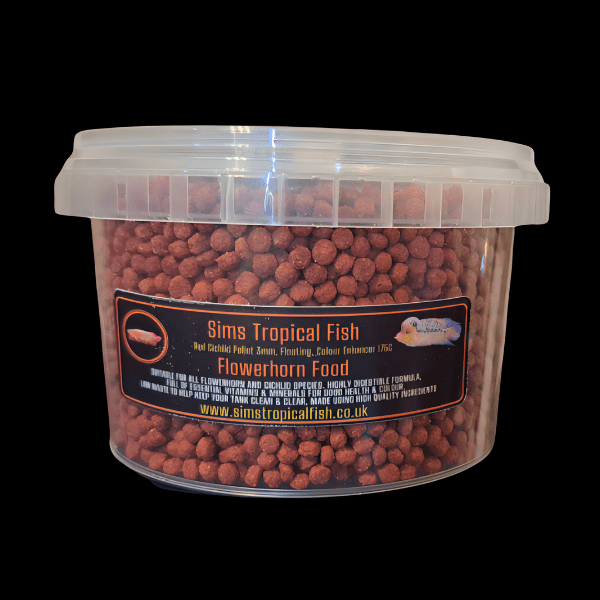
High-quality cichlid pellets (staple diet, colour-enhancing if possible)
-
Frozen or live foods (krill, bloodworms, earthworms, shrimp)
-
Occasional vegetables (peas, spinach, zucchini) to aid digestion
Feed 2–3 times daily, offering only what can be consumed in a few minutes.
Tank Mates
Flowerhorns are generally best kept alone due to their aggressive and territorial nature. If kept with others, only very robust tank mates may be considered in a spacious aquarium:
-
Large Plecos
-
Big catfish species
-
Other large, aggressive cichlids (with caution and plenty of space)
Tank mates should never be small or peaceful species, as they may be attacked.
Aggression
Highly aggressive and territorial. Male Flowerhorns will often not tolerate other fish in their space, particularly as they mature. They may attack fish larger than themselves. Keeping them solo is usually the most successful option.
Experience Level
Intermediate to advanced. They are hardy and easy to feed but require strong filtration, large tanks, and owners who can manage their aggression and water quality.
Water Parameters
-
Temperature: 25–30°C (77–86°F)
-
pH: 7.4–8.0
-
Hardness: 9–20 dGH
-
Tank Size: Minimum 55 gallons (210L) for a single specimen; larger is better for adults
Provide a bare-bottom or sand substrate with robust filtration, as they dig and produce a lot of waste. Décor should be minimal and heavy (rocks, driftwood) to withstand their rearranging habits.

Reviews
There are no reviews yet.