
Description
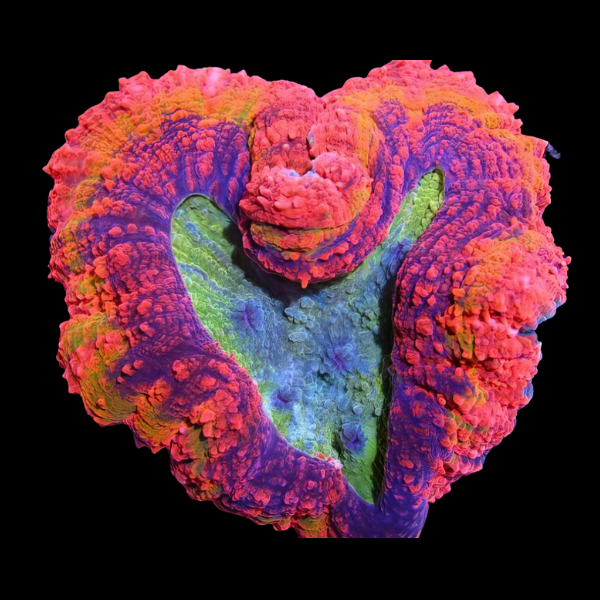
Coral Sea Spiny Brain Hard Coral (Lobophyllia sp.)
(Also known as Open Brain Coral, Lobo Coral, or Meat Coral)
Overview
The Coral Sea Spiny Brain Coral (Lobophyllia sp.) is a visually striking large-polyp stony (LPS) coral, celebrated for its fleshy, lobed structure and vibrant colouration. Colonies form broad, meandering valleys and folds, often displaying intense shades of red, green, orange, blue, and purple, sometimes with contrasting fluorescent streaks or rings around each polyp. Its thick, fleshy tissue expands dramatically under gentle current, creating a bold, undulating appearance that makes it a standout feature coral in any reef display. Lobophyllia is hardy, photosynthetic, and moderately aggressive, making it suitable for aquarists with some LPS experience.
Origin
Native to the Coral Sea, Great Barrier Reef, Fiji, Tonga, and Indonesia. Found on shallow to mid-depth reef slopes and sandy ledges, typically in areas of moderate light and gentle water movement.
Feeding
The Spiny Brain Coral is photosynthetic, housing symbiotic zooxanthellae that provide much of its nutrition through photosynthesis. Regular supplemental feeding supports growth, colouration, and polyp health. Offer 1–2 feedings per week of:
-
Mysis shrimp, brine shrimp, or finely chopped seafood
-
Marine snow or coral plankton blends
-
LPS-targeted coral foods
Feed in the evening or when tentacles are visible. Lobophyllia readily extends feeder tentacles and folds its tissue around food particles.
Lighting
Moderate lighting. Provide bright but indirect illumination using LED, T5, or metal halide systems.
-
PAR range: 100–200 µmol/m²/s
-
Too much direct light may cause bleaching or tissue retraction.
-
Blue-spectrum lighting accentuates its fluorescent tones.
Water Flow
Low to moderate, indirect flow. Gentle, variable current helps keep the coral clean and oxygenated while allowing its fleshy tissue to expand fully. Avoid strong or direct flow that could cause tearing or inhibit inflation.
Placement
-
Best placed on sandy substrate or lower rockwork where it can rest securely.
-
Avoid sharp or rough surfaces that may damage tissue.
-
Allow 10–15 cm (4–6 inches) of clearance from other corals due to its sweeper tentacles.
-
Once placed, avoid moving frequently, as its soft tissue can be easily torn from its skeleton.
Tank Mates
Reef safe with caution. Compatible with:
-
All peaceful, reef-safe fish (clownfish, gobies, tangs, wrasses, etc.)
-
Shrimp, snails, and hermit crabs
-
Other LPS and soft corals placed at a safe distance
Avoid:
-
Aggressive stinging corals (e.g., Galaxea, Euphyllia, Hydnophora) nearby
-
Butterflyfish, large angelfish, or puffers that may nip its fleshy tissue
Aggression
Moderately aggressive. Lobophyllia extends short sweeper tentacles at night to defend its territory and can sting nearby corals. Maintain generous spacing and use activated carbon filtration in mixed reef tanks.
Experience Level
Beginner to intermediate. Lobophyllia is a robust coral that tolerates moderate fluctuations in water conditions if parameters remain stable overall. A great LPS coral for aquarists looking to add colour and texture to a peaceful reef setup.
Water Parameters
-
Temperature: 24–27°C (75–81°F)
-
pH: 8.1–8.4
-
Salinity: 1.024–1.026 SG
-
Hardness (dKH): 8–12
-
Calcium: 400–450 ppm
-
Magnesium: 1250–1350 ppm
-
Nitrate: <10 ppm
-
Tank Size: Minimum 75 gallons (280L) for stability and sufficient space
Stable alkalinity and calcium levels are essential for skeletal growth and long-term health.
Reef Compatibility
Reef safe with caution. The Coral Sea Spiny Brain Coral is a hardy and vividly coloured show coral that adds depth and texture to LPS and mixed reef aquariums. With its fleshy folds, intricate structure, and rich colour palette, it makes an excellent sandbed or lower-rock display coral under soft, blue illumination.




Reviews
There are no reviews yet.