
Description
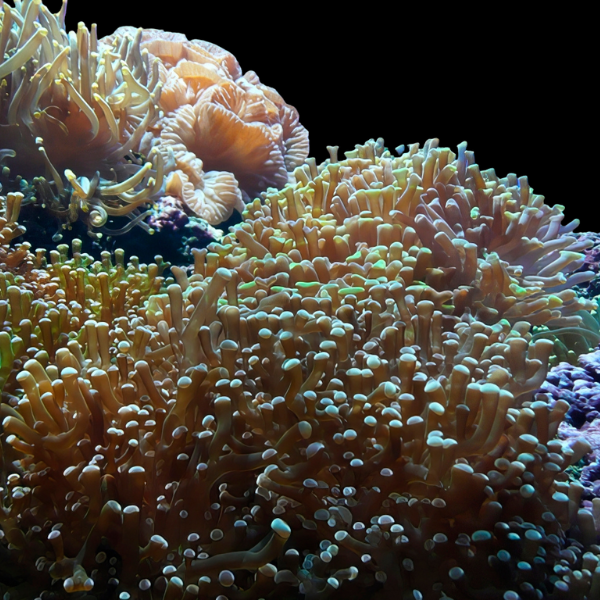
Honey Hard Coral (Euphyllia sp.)
(Also known as Honey Coral, Honey Hammer Coral, or Honey Anchor Coral)
Overview
The Honey Hard Coral (Euphyllia sp.) is a striking and graceful large-polyp stony (LPS) coral, admired for its warm golden-yellow to amber tentacles tipped with lighter or white ends. Closely related to other Euphyllia species such as hammer and frogspawn corals, the Honey Coral displays the same elegant, flowing polyp movement that adds life and motion to reef aquariums. Its rich honey-toned colouring makes it a stunning focal coral, especially under blue lighting where its soft fluorescence glows beautifully. Hardy yet sensitive to changes, it thrives best under stable conditions with moderate lighting and gentle flow.
Origin
Native to the Indo-Pacific region, including the Coral Sea, Great Barrier Reef, Fiji, Tonga, and Indonesia. Found in protected reef slopes and lagoons, often inhabiting areas of low to moderate current and diffused sunlight.
Feeding
The Honey Coral is photosynthetic, deriving most of its energy from zooxanthellae within its tissue. However, regular feeding supports faster growth and richer coloration. Offer 1–2 feedings per week with:
-
Mysis shrimp or enriched brine shrimp
-
LPS-targeted coral foods
-
Finely chopped marine meat or coral pellets
Target feeding when the polyps are fully extended (usually in the evening) yields the best results.
Lighting
Moderate lighting. Provide strong but indirect illumination using LED, T5, or hybrid lighting systems.
-
PAR range: 100–200 µmol/m²/s
-
Avoid harsh, direct lighting which can cause tissue recession or bleaching.
-
Under blue or actinic lighting, the coral’s golden hues take on a radiant, metallic glow.
Water Flow
Low to moderate, indirect flow. The Honey Coral prefers gentle, swaying movement that allows the tentacles to extend fully. Avoid direct or turbulent flow that can tear delicate tissue or prevent expansion.
Placement
-
Place on lower to mid rockwork or the substrate, depending on light levels.
-
Ensure at least 10–15 cm (4–6 inches) of space around the coral, as Euphyllia species extend long sweeper tentacles at night that can sting nearby corals.
-
Avoid sharp rocks or unstable structures that may damage the coral when expanded.
Tank Mates
Reef safe with caution. Compatible with:
-
Peaceful reef fish (clownfish, gobies, tangs, wrasses, etc.)
-
Snails, hermit crabs, shrimp, and other invertebrates
-
Other Euphyllia species of the same group (Hammer, Frogspawn, Torch) with space provided
Avoid:
-
Aggressive corals (e.g., Galaxea, Hydnophora) or any with long sweeper tentacles nearby
-
Butterflyfish, puffers, or large angelfish that may nip polyps
Aggression
Moderately aggressive. Euphyllia corals can extend sweeper tentacles several inches at night to defend their territory. Provide adequate spacing from neighbours and maintain gentle, steady flow to disperse any chemical aggression.
Experience Level
Intermediate. The Honey Hard Coral is hardy once settled but requires stable parameters and careful placement. It’s a reliable, rewarding choice for aquarists familiar with LPS care and looking to add warm colour and motion to their reef display.
Water Parameters
-
Temperature: 24–27°C (75–81°F)
-
pH: 8.1–8.4
-
Salinity: 1.024–1.026 SG
-
Alkalinity (dKH): 8–12
-
Calcium: 400–450 ppm
-
Magnesium: 1250–1350 ppm
-
Nitrate: <10 ppm
-
Phosphate: <0.03 ppm
-
Tank Size: Minimum 100 litres (25 gallons) for small colonies; larger tanks recommended for growth
Stable alkalinity and calcium levels are crucial for skeletal development and maintaining vibrant colouration.
Reef Compatibility
Reef safe with caution. The Honey Hard Coral is a stunning, glowing addition to LPS and mixed reef tanks. Its soft golden hue, fluid motion, and branching form create a natural focal point in the aquarium. When given space, gentle flow, and consistent care, it will thrive and add both visual warmth and dynamic movement to the reefscape.
Interesting Fact
Many aquarists report that Euphyllia colonies with honey or gold coloration appear to change tone under different light spectrums — from deep amber under white light to bright neon gold under actinic blue — making it one of the most photogenic LPS corals available.




Reviews
There are no reviews yet.