
Description
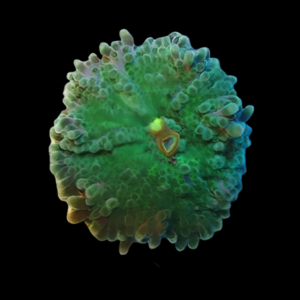
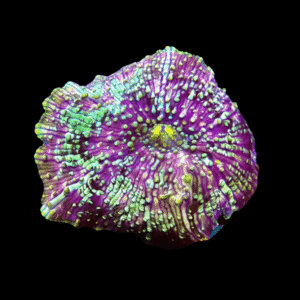
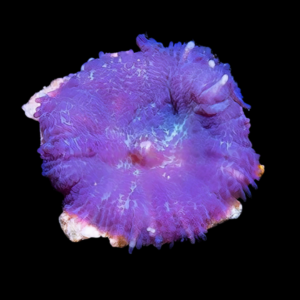
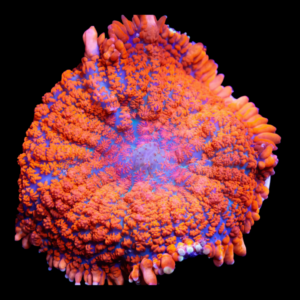
Leather Rock Mushroom (Fungiidae Coral) (Green Rhodactis sp.)
(Also known as Green Leather Mushroom Coral, Elephant Ear Mushroom Coral, or Textured Rock Mushroom Coral)
Overview
The Green Leather Rock Mushroom (Rhodactis sp.) is a hardy and visually captivating soft coral (Corallimorpharian) prized for its thick, leathery texture and vibrant green hues. The large, fleshy oral disc features a velvety or finely wrinkled surface with short, stubby tentacles that give it a soft, tactile appearance. Colours range from bright neon green to deep emerald, often accented with metallic or iridescent tones under blue-spectrum lighting. Known for its durability and adaptability, this coral makes an excellent addition to both beginner and advanced reef systems, particularly in shaded or lower-light areas where stony corals may struggle.
Origin
Native to the Indo-Pacific region, including the Great Barrier Reef, Coral Sea, Fiji, Tonga, Indonesia, and the Solomon Islands. Typically found in lagoon slopes and sheltered reef zones, attached to hard rock or coral rubble where light and flow are moderate to low.
Feeding
The Leather Rock Mushroom Coral is photosynthetic, hosting zooxanthellae that supply most of its energy. Supplemental feeding encourages faster growth, brighter colouration, and propagation. Feed 1–2 times per week with:
-
Mysis or enriched brine shrimp
-
Finely chopped seafood (shrimp, clam, or fish)
-
Marine snow or fine coral food powders
Target feeding is beneficial but not essential, as this coral can absorb dissolved nutrients effectively from the water column.
Lighting
Low to moderate lighting. Rhodactis corals prefer diffused, gentle illumination and may fade under excessive light.
-
PAR range: 50–150 µmol/m²/s
-
Ideal placement in shaded rockwork or on the lower levels of the aquarium.
-
Blue or actinic lighting enhances its natural fluorescent green tones.
Water Flow
Low to moderate, indirect flow. Gentle, variable currents help promote full expansion while preventing debris buildup. Strong, direct flow can cause retraction or detachment.
Placement
-
Place on lower rockwork or sandy substrate, away from aggressive stinging corals.
-
Allow 5–10 cm (2–4 inches) of space between colonies to prevent competition.
-
The coral attaches easily to rock and can spread over time through budding or tissue division.
-
Excellent for shaded aquascape zones or as a focal coral in low-light reef areas.
Tank Mates
Reef safe. Compatible with:
-
Peaceful reef fish (wrasses, gobies, tangs, blennies, clownfish, etc.)
-
Invertebrates such as snails, shrimp, and hermit crabs
-
Other soft corals and non-aggressive LPS species
Avoid:
-
Aggressive stinging corals (e.g., Euphyllia, Galaxea, Hydnophora)
-
Large angelfish or butterflyfish that may nip at soft tissue
Aggression
Moderate. Rhodactis corals can release mild toxins (allelopathy) and may overgrow slower species. Maintain good spacing to prevent contact or competition.
Experience Level
Beginner. The Green Leather Rock Mushroom Coral is exceptionally hardy and tolerant of a wide range of conditions, making it an ideal species for novice reef keepers and a reliable, low-maintenance choice for advanced systems.
Water Parameters
-
Temperature: 24–27°C (75–81°F)
-
pH: 8.1–8.4
-
Salinity: 1.024–1.026 SG
-
Alkalinity (dKH): 8–12
-
Calcium: 380–450 ppm
-
Magnesium: 1250–1350 ppm
-
Nitrate: <10 ppm (tolerant up to 15 ppm)
-
Phosphate: <0.05 ppm
-
Tank Size: Minimum 50 litres (13 gallons); suitable for nano reefs or larger mixed coral systems
Stable parameters and moderate nutrients help maintain vibrant coloration and healthy tissue growth.
Reef Compatibility
Fully reef safe. The Green Leather Rock Mushroom Coral is a durable, easy-care soft coral that thrives in shaded or low-light zones. Its thick, leathery texture and vivid green tones make it an excellent filler coral, providing both colour and movement to any reefscape.
Interesting Fact
Rhodactis corals can inflate or flatten their bodies to control light exposure and feeding surface area — a unique behaviour that helps them adapt to changing water flow and lighting conditions.