Description
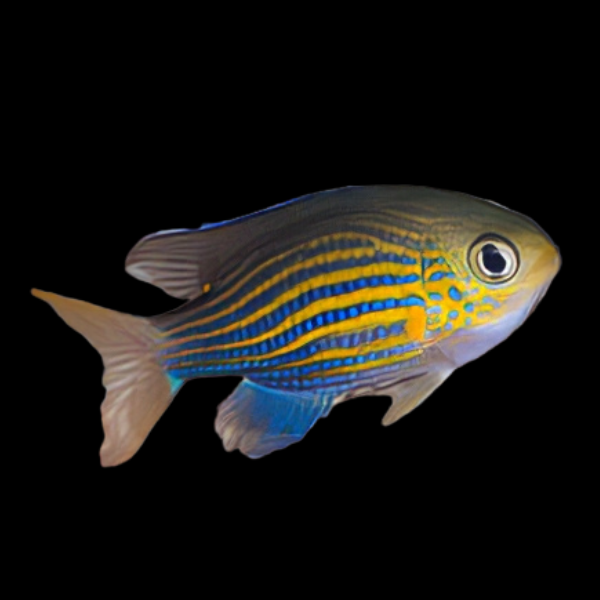
Lined Chromis (Pycnochromis lineatus)
Overview
The Lined Chromis is a small, peaceful damselfish with an elegant appearance, recognised by the fine horizontal linesrunning along its body. Typically silver to pale blue in base colour, the lines add subtle detail that sets it apart from more common chromis species. Growing to about 8–9 cm (3–3.5 inches), it is an active mid-water swimmer and a good candidate for schooling groups in community reef aquariums.
Origin
Native to the Indo-Pacific region, including the Great Barrier Reef, Fiji, Micronesia, and Indonesia. Found hovering in groups above coral-rich reef slopes and lagoons, where they graze on plankton carried in the currents.
Feeding
The Lined Chromis is a planktivore/omnivore that readily adapts to aquarium diets:
-
High-quality marine flakes and micro-pellets
-
Frozen mysis, cyclops, and enriched brine shrimp
-
Occasional finely chopped seafood
-
Spirulina or algae-based foods for variety
Feed 2–3 small meals per day for best condition and activity.
Tank Mates
Peaceful and adaptable, the Lined Chromis mixes well with other non-aggressive reef species:
-
Clownfish
-
Gobies and blennies
-
Reef-safe wrasses
-
Cardinalfish
-
Other small chromis species
Avoid large predatory fish (triggers, lionfish, big wrasses) that may see them as food.
Aggression
Peaceful. Best housed in groups of 5 or more to encourage shoaling behaviour and reduce any dominance-related aggression. Like other chromis, smaller groups can lead to bullying among themselves.
Experience Level
Beginner-friendly. Hardy, attractive, and easy to feed, they are well-suited to newer aquarists looking for schooling reef fish.
Water Parameters
-
Temperature: 24–27°C (75–81°F)
-
pH: 8.1–8.4
-
Salinity: 1.020–1.025 SG
-
Hardness (dKH): 8–12
-
Tank Size: Minimum 30 gallons (115L) for a small group; larger tanks preferred for long-term success
Provide open swimming areas with branching rock or coral structures for cover.
Reef Compatibility
Reef safe. They pose no threat to corals or invertebrates and are excellent schooling additions to a reef tank.