Description
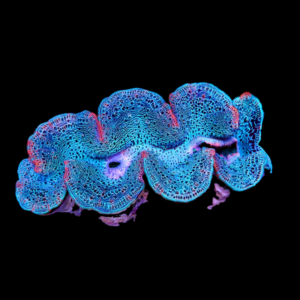
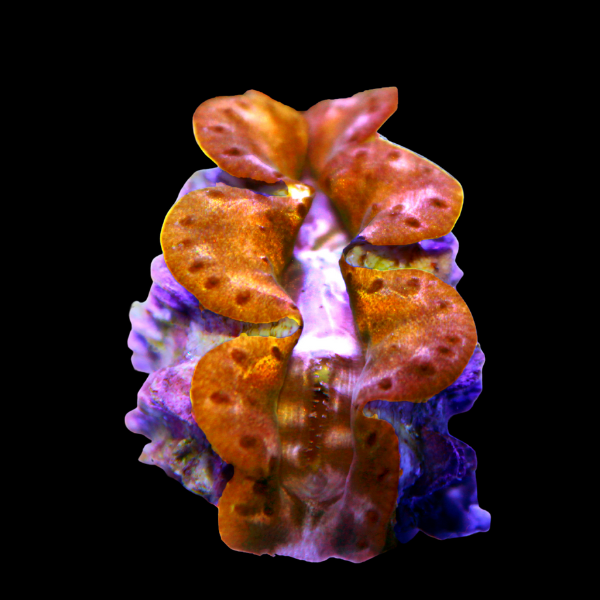
Maxima Gold Cultured Clam (Tridacna maxima)
(Also known as the Small Giant Clam or Gold Maxima Clam)
Overview
The Maxima Gold Clam is a stunning variety of Tridacna maxima, celebrated for its brilliant golden-yellow mantlewith intricate iridescent patterns and metallic highlights. This species is among the most colourful and sought-after clams in the marine aquarium trade. Cultured Maxima clams are aquacultured in shallow, sunlit ocean farms, making them more sustainable and adaptable to aquarium life than wild specimens. Reaching up to 20–30 cm (8–12 inches) in length, they are smaller than other Tridacna species but equally impressive for their vivid coloration and active filtering behaviour.
Origin
Native to the Indo-Pacific region, including Fiji, Tonga, Indonesia, and the Great Barrier Reef. Naturally found on shallow reef flats and lagoons attached to hard substrates in high-light environments. Cultured clams are raised in similar conditions to promote hardiness and sustainability.
Lighting
High lighting required. The Maxima Clam relies heavily on its symbiotic zooxanthellae for energy through photosynthesis.
-
Provide strong, full-spectrum lighting using LED, T5, or metal halide systems.
-
PAR levels of 250–400 µmol/m²/s are ideal.
-
Place in the upper half of the aquarium or on rock ledges where light intensity is greatest.
Insufficient light will cause the clam to lose colour and may eventually lead to starvation.
Water Flow
Low to moderate, indirect flow. The clam should receive enough movement to keep its mantle gently swaying and to provide oxygen and nutrients, but avoid direct streams from pumps or wavemakers that may cause it to retract.
Feeding
The Gold Maxima is primarily photosynthetic, but smaller specimens (under 7 cm / 3 inches) benefit from supplemental feeding:
-
Live phytoplankton (essential for juveniles)
-
Marine microalgae or commercial clam foods
-
Finely blended coral foods and marine snow
Feed 1–2 times per week in systems with young clams or low natural plankton density. Mature clams derive most of their energy from light and dissolved nutrients.
Placement
-
Secure the clam on solid rockwork or a clam cradle, as it uses its byssal foot to anchor to surfaces.
-
Provide stable footing and avoid moving it once attached.
-
Position so the mantle receives unobstructed light and is protected from sand or detritus.
Tank Mates
Peaceful and reef safe. Suitable companions include:
-
Reef-safe fish (clownfish, gobies, tangs, wrasses)
-
Snails, hermits, and other invertebrates
-
Corals with short tentacles
Avoid species known to nip clam mantles, such as:
-
Large angelfish and butterflyfish
-
Puffers, triggers, or wrasses with a taste for invertebrates
Aggression
Non-aggressive. The clam poses no threat to other reef life but should be kept away from corals that may extend long sweeper tentacles.
Experience Level
Intermediate to advanced. Cultured Maxima Clams are hardy under stable conditions but require strong lighting, excellent water quality, and careful acclimation.
Water Parameters
-
Temperature: 25–28°C (77–82°F)
-
pH: 8.1–8.4
-
Salinity: 1.024–1.026 SG
-
Hardness (dKH): 8–12
-
Calcium: 400–450 ppm
-
Magnesium: 1250–1350 ppm
-
Tank Size: Minimum 100 litres (25 gallons) for a small specimen; 200+ litres (50+ gallons) for adults
Maintain stable calcium and alkalinity for proper shell growth. Use protein skimming and regular water changes to ensure high water clarity and nutrient balance.
Reef Compatibility
Fully reef safe. The Gold Maxima Clam coexists beautifully with corals and invertebrates, adding stunning golden hues and natural filtration to the reef ecosystem.