
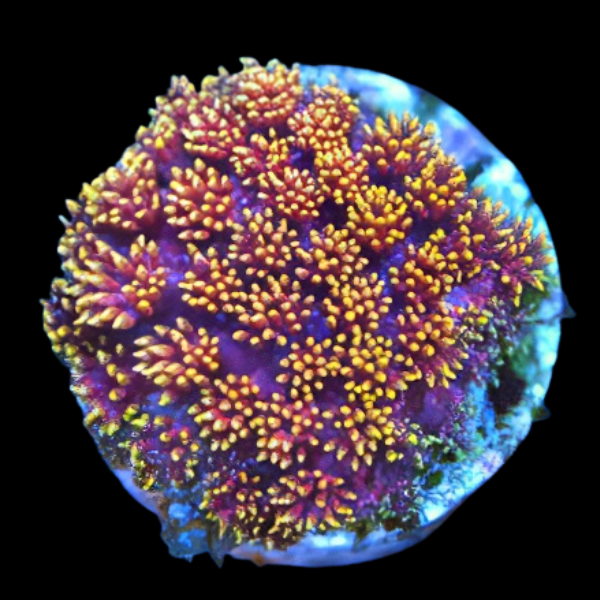
Description
Pom Pom Short Tentacle Hard Coral (Goniopora sp.)
(Also known as Flowerpot Coral, Daisy Coral, or Short Tentacle Goniopora)
Overview
The Pom Pom Short Tentacle Hard Coral (Goniopora sp.) is a visually captivating large-polyp stony (LPS) coral, characterised by its dense clusters of short, daisy-like polyps that gently sway in the current, creating a soft, pom-pom effect. Its compact growth form makes it ideal for smaller aquariums or tighter aquascapes, offering vivid colouration and movement without occupying excessive space. Available in greens, pinks, reds, purples, and metallic hues, Goniopora adds a delicate, natural elegance to reef displays. Though once considered difficult to maintain, improved husbandry and coral foods have made this species far more accessible to modern reef aquarists.
Origin
Native to the Indo-Pacific region, including the Great Barrier Reef, Coral Sea, Fiji, Tonga, Indonesia, and the Red Sea. Typically found in sheltered reef slopes and lagoons, where lighting is moderate and water movement gentle.
Feeding
The Pom Pom Short Tentacle Coral is photosynthetic, hosting zooxanthellae that provide much of its nutrition. However, regular feeding greatly enhances health, colour, and polyp density. Feed 2–3 times per week with:
-
Marine snow or microplankton
-
Phytoplankton and powdered coral foods (e.g., reef roids or coral dust)
-
Rotifers or fine suspended particulate foods
Feed during low flow to ensure particles settle over the extended polyps.
Lighting
Moderate lighting. Provide bright but diffused illumination using LED, T5, or hybrid lighting systems.
-
PAR range: 100–200 µmol/m²/s
-
Avoid direct, high-intensity light which can cause retraction or bleaching.
-
Blue-spectrum or actinic lighting enhances fluorescence and brings out intricate tip colouration.
Water Flow
Low to moderate, indirect flow. Gentle, variable currents are ideal, allowing the short tentacles to move naturally. Strong, direct flow can cause the polyps to retract or damage delicate tissue.
Placement
-
Position on mid to lower rockwork or open substrate, where it receives moderate light and calm, swirling flow.
-
Allow 10 cm (4 inches) of space around the coral to prevent irritation from other species.
-
Avoid contact with sharp rock or nearby aggressive corals, as Goniopora tissue is delicate.
Tank Mates
Reef safe with caution. Compatible with:
-
Peaceful reef fish (gobies, blennies, tangs, wrasses, clownfish, etc.)
-
Snails, shrimp, and small hermit crabs
-
Other peaceful LPS and soft corals at safe distances
Avoid:
-
Aggressive corals (e.g., Euphyllia, Galaxea, Hydnophora)
-
Large angelfish and butterflyfish that may nip at the polyps
Aggression
Peaceful. Goniopora does not possess strong stinging tentacles and relies on spacing rather than aggression for territory. However, it can be harmed by the sweeper tentacles of nearby corals.
Experience Level
Intermediate to advanced. The Pom Pom Short Tentacle Coral thrives under stable water parameters and consistent care. It is more forgiving than long-tentacle varieties but still requires regular feeding and careful placement for long-term success.
Water Parameters
-
Temperature: 24–27°C (75–81°F)
-
pH: 8.1–8.4
-
Salinity: 1.024–1.026 SG
-
Alkalinity (dKH): 8–10
-
Calcium: 420–450 ppm
-
Magnesium: 1250–1350 ppm
-
Nitrate: 2–10 ppm
-
Phosphate: 0.02–0.05 ppm
-
Tank Size: Minimum 100 litres (25 gallons); larger systems preferred for stability
Maintain consistent trace elements, particularly iron and manganese, which aid Goniopora health and polyp extension.
Reef Compatibility
Reef safe. The Pom Pom Short Tentacle Coral is an elegant, flowing coral that brings colour and life to mixed reef aquariums. Its compact, tufted growth and peaceful temperament make it an excellent choice for aquarists wanting to showcase movement and natural texture in their reefscape.
Interesting Fact
Each Goniopora polyp has 24 short tentacles, giving the coral its iconic “pom pom” appearance. Its close relative, Alveopora, has only 12 tentacles per polyp, which is the easiest way to tell the two apart.



Reviews
There are no reviews yet.