Description
Pygmy Chromis (Chromis acares)
Overview
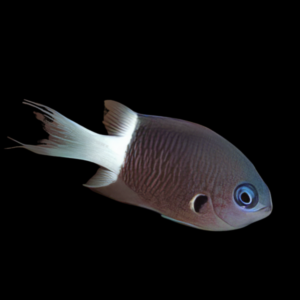
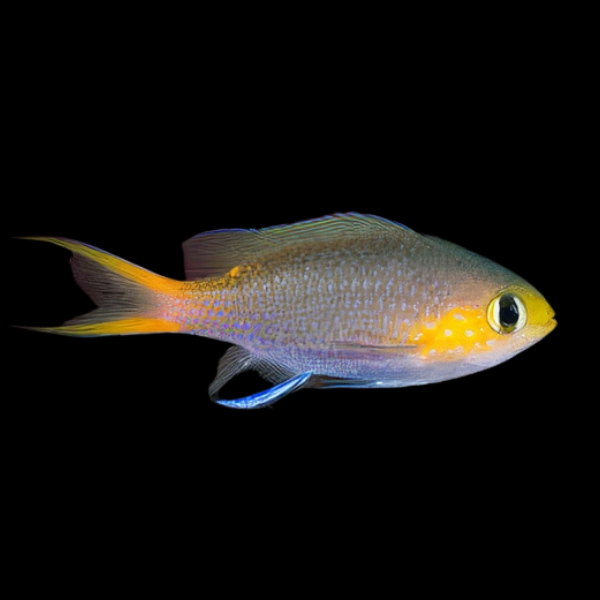
The Pygmy Chromis is one of the smallest members of the chromis family, rarely exceeding 4–5 cm (1.5–2 inches) in length. It has a delicate, slender body that shimmers blue-green with a hint of gold depending on the lighting. Its small size, peaceful schooling nature, and gentle activity make it an ideal choice for nano to medium reef aquariums.
Origin
Native to the Central and Western Pacific, including the Great Barrier Reef, Fiji, Tonga, and French Polynesia. Found in large shoals hovering above coral-rich reef slopes, lagoons, and outer reefs.
Feeding
A planktivorous omnivore that readily accepts aquarium foods:
-
High-quality marine micro-pellets and flakes
-
Frozen mysis shrimp, cyclops, and enriched brine shrimp
-
Occasional finely chopped seafood
-
Algae- or spirulina-based foods for balance
Feed small amounts 2–3 times daily to mimic natural grazing behaviour.
Tank Mates
The Pygmy Chromis is very peaceful and mixes well with most reef-safe fish, including:
-
Clownfish
-
Gobies and blennies
-
Small reef wrasses
-
Cardinalfish
-
Other peaceful chromis species
Avoid aggressive tank mates, as their small size makes them vulnerable.
Aggression
Peaceful. Unlike some larger chromis, they are less likely to bully conspecifics. They are best kept in small groups (5–7 individuals) where they display attractive shoaling behaviour.
Experience Level
Beginner-friendly. Hardy, non-aggressive, and easy to feed, making them an excellent choice for aquarists of all levels, including those with nano reef systems.
Water Parameters
-
Temperature: 24–27°C (75–81°F)
-
pH: 8.1–8.4
-
Salinity: 1.020–1.025 SG
-
Hardness (dKH): 8–12
-
Tank Size: Minimum 20 gallons (75L) for a small group; larger aquariums allow for more natural shoaling
Provide open water for schooling with plenty of coral or rock cover for retreat.
Reef Compatibility
Reef safe. Will not harm corals or invertebrates and are an excellent small schooling species for reef aquariums.