Description
True Red-Legged Hermit Crab (Clibanarius tricolor)
(Also known as Tricolor Hermit Crab, Red-Legged Hermit Crab, or Caribbean Reef Hermit Crab)
Overview
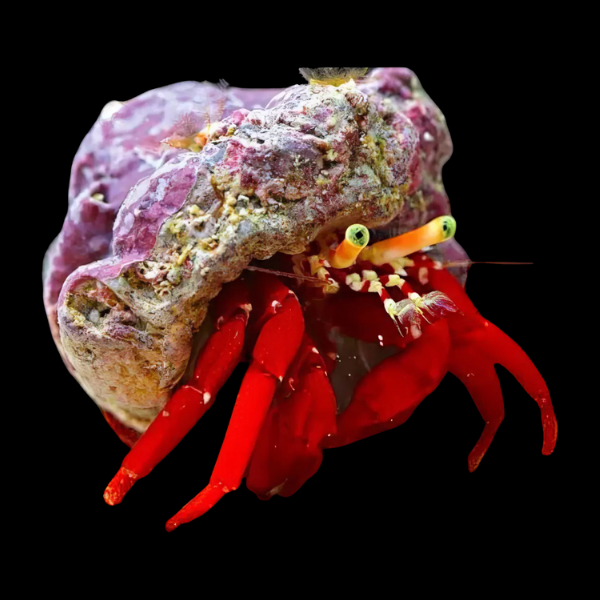
The True Red-Legged Hermit Crab (Clibanarius tricolor) is a small, brightly coloured marine hermit crab known for its bold red or reddish-orange legs contrasted by blue banding and white facial markings. Highly active and constantly foraging, this hardy species is one of the most effective members of any reef aquarium cleanup crew. It consumes algae, detritus, and uneaten food, helping to maintain clean substrate and rock surfaces. Peaceful, reef safe, and easy to care for, C. tricolor is a must-have for both beginner and experienced aquarists.
Origin
Native to the Caribbean Sea, Gulf of Mexico, and Western Atlantic Ocean. Commonly found in shallow coastal reefs, lagoons, and rocky intertidal zones, where it scavenges among coral rubble and algae-covered rock.
Feeding
An omnivorous scavenger, the True Red-Legged Hermit Crab naturally grazes on algae and decaying matter. It benefits from supplemental feeding 3–4 times per week, especially in clean or newer aquariums. Offer:
-
Sinking algae wafers or marine pellets
-
Finely chopped mysis shrimp or seafood
-
Seaweed sheets (nori)
-
Leftover flake or pellet food
Consistent feeding helps prevent aggression and ensures steady growth.
Lighting
Low to moderate lighting. The crab is not dependent on light levels but will forage actively throughout the day and night under typical reef illumination.
Water Flow
Moderate flow. Provide stable, circulating water to distribute food particles and prevent detritus buildup, while leaving calm areas for foraging and rest.
Placement & Habitat Setup
-
Include ample live rock for grazing and shelter.
-
Provide fine sand or small-grain substrate for natural movement.
-
Supply a selection of empty shells of varying shapes and sizes to accommodate growth and reduce shell-related aggression.
-
Ensure rockwork is stable — hermits are surprisingly strong and may shift decor while climbing.
Tank Mates
Reef safe. Compatible with:
-
Peaceful reef fish (clownfish, gobies, tangs, blennies, wrasses, etc.)
-
Other small hermit crabs and shrimp (with sufficient space and spare shells)
-
Corals and most invertebrates
Avoid:
-
Predatory fish (triggers, puffers, large wrasses)
-
Large aggressive crab species
-
Snail-only tanks without extra shells (hermits may kill snails to upgrade their housing)
Aggression
Peaceful, mildly opportunistic. Generally non-aggressive, but shell competition can occur if spares are limited. Keep multiple empty shells per hermit to prevent disputes.
Experience Level
Beginner. Extremely hardy and easy to care for, Clibanarius tricolor is ideal for aquarists of all experience levels and highly recommended for maintaining tank hygiene.
Water Parameters
-
Temperature: 24–27°C (75–81°F)
-
pH: 8.1–8.4
-
Salinity: 1.024–1.026 SG
-
Ammonia / Nitrite: 0 ppm
-
Nitrate: <10 ppm
-
Tank Size: Minimum 20 litres (5 gallons) for a small group; larger tanks preferred for stability
Lifespan & Size
-
Size: Up to 2.5 cm (1 inch) including shell
-
Lifespan: 2–4 years in captivity under optimal conditions
Reef Compatibility
Fully reef safe. The True Red-Legged Hermit Crab is an excellent addition to reef aquariums, consuming nuisance algae and detritus without harming corals or other sessile invertebrates. It’s a reliable, low-maintenance species that brings both utility and vibrant colour to the marine environment.