Description
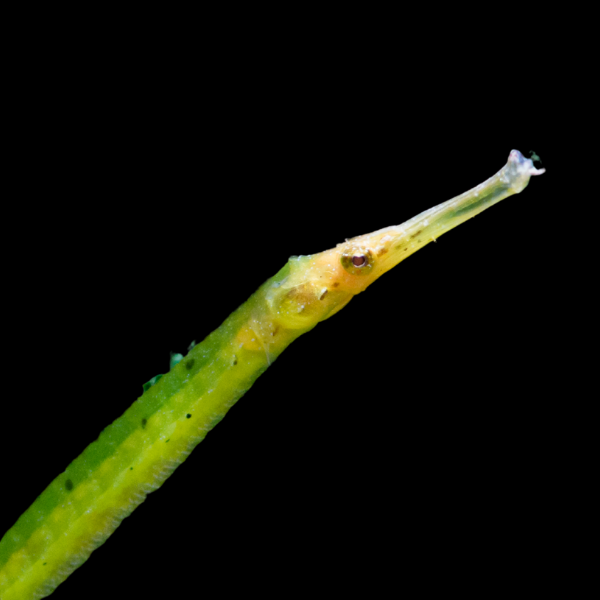
Crocodile Pipefish (Syngnathoides biaculeatus)
(Also known as the Double-Ended or Alligator Pipefish)
Overview
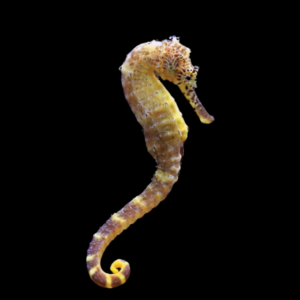
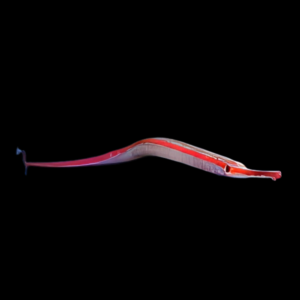
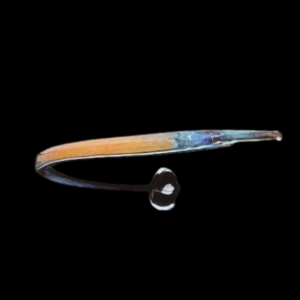
The Crocodile Pipefish is one of the most distinctive members of the Syngnathidae family, named for its elongated, stick-like body and snout resembling a miniature crocodile. Reaching up to 28–30 cm (11–12 inches) in length, it is among the largest pipefish species. Its camouflage and graceful movement make it a fascinating display animal, though its care is challenging and suited only to experienced aquarists.
Origin
Widespread throughout the Indo-Pacific region, including the Red Sea, East Africa, Indonesia, northern Australia, and Micronesia. Typically found in seagrass beds, mangrove shallows, and calm reef lagoons, where it hides among vegetation and hunts for tiny crustaceans.
Feeding
The Crocodile Pipefish is a specialised micro-carnivore. In nature, it feeds almost exclusively on live planktonic organisms such as copepods, amphipods, and small shrimp larvae. In captivity, success depends on access to live food and a mature, pod-rich environment. Offer:
-
Live copepods and amphipods (essential)
-
Live enriched baby brine shrimp
-
Live mysis shrimp or small feeder shrimp (as treats)
-
Cultured live foods from refugiums
Some individuals may slowly adapt to frozen cyclops or mysis, but this is uncommon. Feed multiple small meals daily.
Tank Mates
Extremely peaceful and best housed with other gentle, slow-moving species. Suitable tank mates include:
-
Seahorses and other pipefish
-
Gobies and blennies (non-aggressive species)
-
Cardinalfish and firefish
-
Small, reef-safe invertebrates
Avoid fast-feeding or aggressive species (wrasses, dottybacks, triggers, tangs) that outcompete them for food or cause stress.
Aggression
Completely peaceful. Can be kept singly, as pairs, or in small groups in larger systems. Males may carry eggs on the underside of their bodies, similar to seahorses.
Experience Level
Advanced to expert. Requires pristine water conditions, abundant live microfauna, and a calm environment. Due to its size and feeding behaviour, it is one of the more demanding pipefish species to keep successfully long-term.
Water Parameters
-
Temperature: 24–27°C (75–81°F)
-
pH: 8.1–8.4
-
Salinity: 1.022–1.025 SG
-
Hardness (dKH): 8–12
-
Tank Size: Minimum 100 gallons (380L) for an adult pair or small group
Provide a naturalistic environment with macroalgae, seagrass, and live rock, gentle current, and abundant hiding spots.
Reef Compatibility
Reef safe with caution. Will not harm corals or invertebrates but may struggle in busy reef tanks with active feeders. Best kept in dedicated seagrass or peaceful reef systems with refugiums supporting live copepod populations.