
Description
Hairy Red-Legged Hermit Crab (Dardanus megistos)
(Also known as White-Spotted Hermit Crab, Giant Red Hermit Crab, or Red Hairy Hermit Crab)
Overview
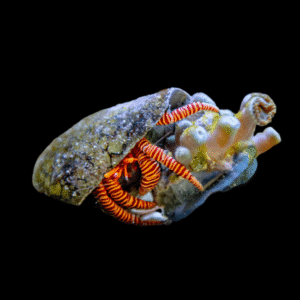
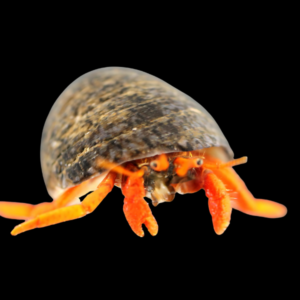
The Hairy Red-Legged Hermit Crab (Dardanus megistos) is a striking and powerful marine hermit crab, instantly recognisable by its bright red, hairy legs covered with white spots and its large, robust claws. This species is much larger than most hermits commonly kept in reef aquariums and is known for its bold personality and constant activity. It’s a hardy scavenger that excels at cleaning up detritus and leftover food but requires plenty of space and careful tankmate selection, as it can become territorial and opportunistic as it grows.
Origin
Widespread across the Indo-Pacific region, including the Coral Sea, Great Barrier Reef, Fiji, Tonga, and the Red Sea. Found in shallow reef flats, lagoons, and rocky coastal areas, where it forages across sandy substrates and coral rubble zones.
Feeding
An omnivorous scavenger, Dardanus megistos consumes a wide variety of organic materials. In captivity, it adapts easily to prepared foods. Feed 3–4 times per week with:
-
Mysis shrimp, krill, or chopped clam
-
Sinking pellets and algae wafers
-
Marine flakes and leftover fish food
-
Nori or seaweed strips for added fibre
Regular feeding reduces aggression toward tank mates and prevents it from attacking snails or smaller crabs for food or shells.
Lighting
Low to moderate lighting. The crab does not rely on light for activity and will often be seen foraging both day and night. Provide some shaded areas for rest and shelter.
Water Flow
Moderate flow. Stable, circulating water helps distribute food particles and prevents debris accumulation. Avoid high-intensity currents that could topple shells or rockwork.
Placement & Habitat Setup
-
Provide a spacious tank with ample live rock for climbing and hiding.
-
Use a mixed sandy and rocky substrate to allow for natural foraging and movement.
-
Supply numerous empty shells of various sizes — this species grows rapidly and will need progressively larger homes.
-
Ensure rock structures are stable; large hermits can easily dislodge unsecured decor.
Tank Mates
Semi-aggressive. Compatible with:
-
Medium to large reef-safe fish (tangs, wrasses, triggerfish species that are not crustacean predators)
-
Large, robust invertebrates (urchins, starfish)
-
Other Dardanus species only in very large systems with defined territories
Avoid:
-
Small fish, shrimp, and snails (may be preyed upon)
-
Delicate corals and sessile invertebrates (can be knocked over or disturbed)
-
Small crabs or hermits — often outcompeted or attacked
Aggression
Semi-aggressive to aggressive. As it matures, D. megistos becomes territorial, often fighting for food or shells. Provide frequent feedings and a wide shell selection to reduce conflict. Due to its strength, it can inadvertently damage tank decor or corals.
Experience Level
Intermediate to advanced. Hardy and fascinating, but best suited for experienced marine keepers who can accommodate its size, strength, and territorial nature. Ideal for fish-only or large invertebrate display systems, rather than delicate reef tanks.
Water Parameters
-
Temperature: 24–27°C (75–81°F)
-
pH: 8.1–8.4
-
Salinity: 1.024–1.026 SG
-
Ammonia / Nitrite: 0 ppm
-
Nitrate: <10 ppm
-
Tank Size: Minimum 200 litres (55 gallons) for juveniles; 400+ litres (100+ gallons) recommended for adults
Lifespan & Size
-
Size: Up to 15 cm (6 inches) across shell, including claws
-
Lifespan: 5–10 years in captivity under stable, well-fed conditions
Reef Compatibility
Not reef safe. While an excellent scavenger, the Hairy Red-Legged Hermit Crab is too large and destructive for delicate reef environments. It may accidentally knock over corals, disturb rockwork, and prey on small tank mates. Best kept in fish-only with live rock (FOWLR) or species-specific setups.
Interesting Fact
In the wild, Dardanus megistos often forms a mutualistic partnership with sea anemones, attaching them to its shell for protection — the anemones gain mobility and food scraps, while the crab benefits from their stinging defence.