Description
Anemone Rock Mushroom (Fungiidae Coral) (Anemonia sp.)
(Also known as Rock Anemone, Mushroom Anemone, or Disc Anemone)
Overview
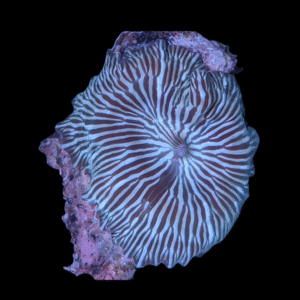
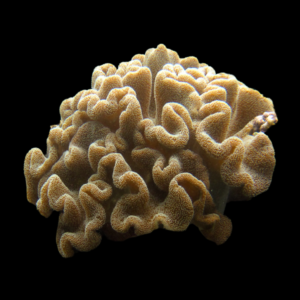
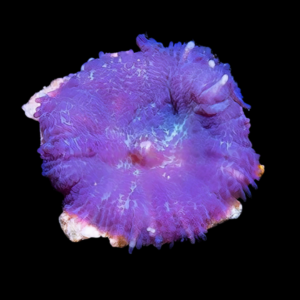
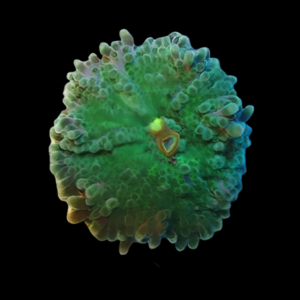
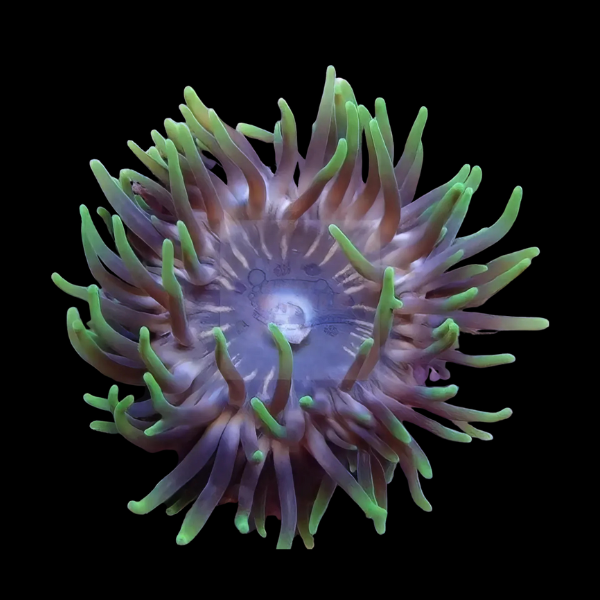
The Anemone Rock Mushroom (Anemonia sp.) is a captivating and hardy Corallimorpharian (mushroom-like anemone) that bridges the gap between true anemones and soft corals. It features flat, fleshy oral discs covered with numerous tentacles that resemble a miniature sea anemone. Colours vary widely — including green, brown, pink, blue, and metallic hues — often with fluorescent tips under actinic lighting. Unlike stony corals, Anemonia lacks a hard skeleton, allowing its soft body to flex and move gracefully with the current. Highly adaptable and visually striking, it’s an excellent addition for aquarists seeking motion and colour in shaded or low-flow areas of the aquarium.
Origin
Native to the Indo-Pacific region, including the Great Barrier Reef, Coral Sea, Fiji, Tonga, Indonesia, and the Red Sea. Commonly found attached to rocks, reef flats, and lagoon slopes, often in partially shaded areas with low to moderate light and current.
Feeding
The Anemone Rock Mushroom is photosynthetic, housing zooxanthellae that provide much of its nutrition. However, supplemental feeding helps maintain growth, colour, and reproduction. Feed 2–3 times per week with:
-
Mysis or enriched brine shrimp
-
Finely chopped seafood (shrimp, clam, or fish)
-
Marine plankton or coral foods
Target feeding is recommended — gently deliver food near the oral disc when tentacles are extended.
Lighting
Low to moderate lighting. Prefers subdued, diffused illumination similar to soft corals and mushroom species.
-
PAR range: 50–150 µmol/m²/s
-
Ideal placement in shaded or indirect light zones.
-
Blue and actinic spectrums enhance fluorescence, especially in green and pink varieties.
Water Flow
Low to moderate, indirect flow. Gentle water movement allows the tentacles to sway naturally while preventing detritus buildup. Excessive flow may cause the coral to close or detach from the substrate.
Placement
-
Place on lower rockwork or substrate, ideally in shaded or low-flow areas.
-
The coral attaches naturally to hard surfaces and may slowly spread by budding or tissue division.
-
Ensure it has room to expand without touching neighbouring corals or anemones.
-
Avoid placing directly under strong light or heavy current.
Tank Mates
Reef safe with caution. Compatible with:
-
Peaceful reef fish (clownfish, gobies, wrasses, tangs, etc.)
-
Invertebrates such as shrimp, snails, and hermit crabs
-
Soft corals and mushroom corals at safe distances
Avoid:
-
Aggressive stinging corals (e.g., Euphyllia, Galaxea, Hydnophora)
-
Large angelfish, butterflyfish, or puffers that may nip at tentacles
Aggression
Moderate. Anemonia can sting nearby corals with its tentacles. It is best positioned away from sensitive species, as it may spread and outcompete slower-growing neighbours.
Experience Level
Beginner to intermediate. The Anemone Rock Mushroom is hardy and adaptable, suitable for aquarists of most experience levels. It thrives under a variety of conditions and rewards consistent care with vibrant colour and natural movement.
Water Parameters
-
Temperature: 24–27°C (75–81°F)
-
pH: 8.1–8.4
-
Salinity: 1.024–1.026 SG
-
Alkalinity (dKH): 8–12
-
Calcium: 380–450 ppm
-
Magnesium: 1250–1350 ppm
-
Nitrate: <10 ppm (tolerant up to 15 ppm)
-
Phosphate: <0.05 ppm
-
Tank Size: Minimum 50 litres (13 gallons); ideal for nano reefs or larger mixed systems
Reef Compatibility
Reef safe with caution. The Anemone Rock Mushroom adds flowing motion and brilliant colour to reef tanks. While peaceful toward most invertebrates, it can sting nearby corals, so spacing and placement are key. Once settled, it’s long-lived, resilient, and a visually dynamic addition to the reef.