Description
Blue Lobster (Panulirus versicolor)
(Also known as the Painted Rock Lobster, Tropical Rock Lobster, or Bamboo Lobster)
Overview
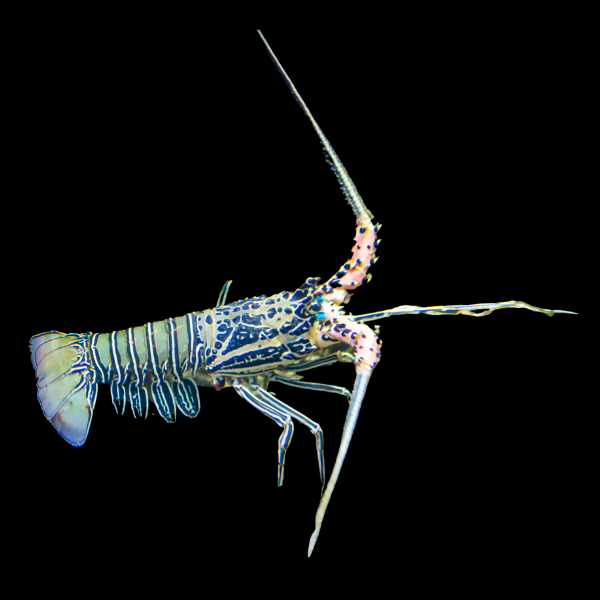
The Blue Lobster is a stunning spiny lobster species, instantly recognisable for its vivid blue, green, and purple bodywith cream-coloured bands across its legs and long striped antennae. Unlike true clawed lobsters, Panulirus species lack large pincers but possess strong spiny exoskeletons for defence. They can grow up to 40 cm (16 inches) in length and are nocturnal, spending daylight hours hiding in caves before venturing out at night to forage.
Origin
Native to the Indo-Pacific region, including the Red Sea, East Africa, Indonesia, Fiji, and Northern Australia. Typically found in coral reefs and rocky crevices, from shallow lagoons to depths of about 15–20 m.
Feeding
The Blue Lobster is an omnivorous scavenger. In the wild, it feeds on algae, detritus, molluscs, and small invertebrates. In aquariums, it will accept:
-
Fresh or frozen seafood (shrimp, clam, mussel, squid, fish)
-
Sinking carnivore pellets or wafers
-
Algae-based foods for variety
-
Leftover food from tank mates (they are efficient scavengers)
Feed 2–3 times per week, ideally in the evening when they are active.
Tank Mates
Best kept in large fish-only-with-live-rock (FOWLR) systems. Suitable companions include:
-
Larger, robust fish (tangs, triggers, groupers, angelfish)
-
Other aggressive/boisterous fish species that will not be intimidated
Avoid:
-
Small fish, shrimp, crabs, or snails (may be eaten)
-
Reef tanks, as they are not safe with corals or ornamental invertebrates
Aggression
Semi-aggressive. While they do not actively hunt larger fish, they are opportunistic feeders and will prey on smaller or slow-moving animals. They may also become territorial toward other lobsters, so only one specimen per tank is recommended.
Experience Level
Intermediate to advanced. Hardy once acclimated, but their large size, strong territorial needs, and incompatibility with reef invertebrates make them better suited to experienced aquarists with large marine setups.
Water Parameters
-
Temperature: 24–28°C (75–82°F)
-
pH: 8.1–8.4
-
Salinity: 1.023–1.026 SG
-
Hardness (dKH): 8–12
-
Tank Size: Minimum 125 gallons (475L) for a single adult
Provide plenty of caves, rockwork, and overhangs to mimic their natural hiding places.
Reef Compatibility
Not reef safe. Will eat crustaceans, snails, and may damage corals while foraging. Best suited to FOWLR aquariums.