Description
Orange Line Chromis (Acanthochromis polyacanthus)
Overview
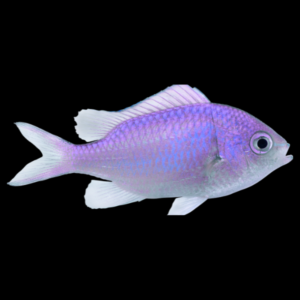
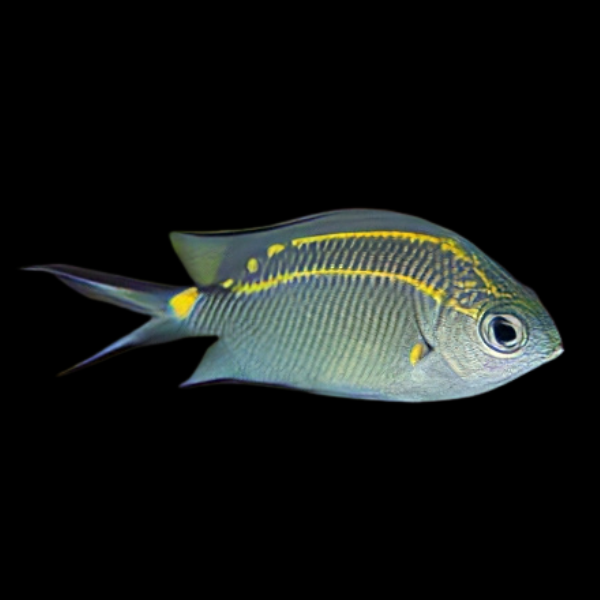
The Orange Line Chromis is a robust and unusually interesting member of the damselfish family. Unlike most chromis, which spawn pelagic eggs, this species is one of the few marine fish to provide parental care — both parents guard and fan their eggs and protect the fry after hatching. Adults reach around 10–12 cm (4–5 inches) and are greyish-silver with a faint horizontal orange line running along the mid-body. While hardy, they are more aggressive and territorialthan the peaceful schooling chromis commonly seen in reef aquariums.
Origin
Native to the Western Pacific Ocean, ranging from the Great Barrier Reef (Australia) to Papua New Guinea, the Philippines, and parts of Micronesia. They inhabit shallow lagoons and reef slopes, usually in pairs or small family groups.
Feeding
An omnivore that adapts well to captive diets:
-
High-quality marine flakes and pellets
-
Frozen mysis shrimp, brine shrimp, and cyclops
-
Finely chopped seafood (clam, shrimp, squid)
-
Spirulina or algae-based foods for variety
Feed 2–3 times daily to support their active behaviour.
Tank Mates
Unlike Blue-Green or Black Axil Chromis, the Orange Line Chromis is territorial and not a schooling fish. Best suited to:
-
Semi-aggressive community fish such as tangs, larger wrasses, or angelfish
-
Kept singly or as a mated pair — groups often result in aggression
Avoid mixing with very peaceful nano fish, which may be bullied.
Aggression
Semi-aggressive. Adults are territorial, especially during breeding when they fiercely defend their eggs and fry. They do not exhibit the same schooling behaviour as other chromis and are best treated more like damsels in terms of temperament.
Experience Level
Beginner to intermediate. Very hardy and adaptable, but aggression management is necessary. They are also one of the few species where breeding in aquariums is possible, making them attractive for aquarists interested in marine fish reproduction.
Water Parameters
-
Temperature: 24–28°C (75–82°F)
-
pH: 8.1–8.4
-
Salinity: 1.020–1.025 SG
-
Hardness (dKH): 8–12
-
Tank Size: Minimum 55 gallons (210L) for a single or pair
Provide live rock for shelter and territory boundaries, along with open water for swimming.
Reef Compatibility
Reef safe. Will not harm corals or invertebrates, though their territorial nature may stress shy reef fish if kept in smaller aquariums.