Description
Candy Pipefish (Dunckerocampus pessuliferus)
(Also known as the Yellow-Banded Pipefish or Banded Pipefish)
Overview
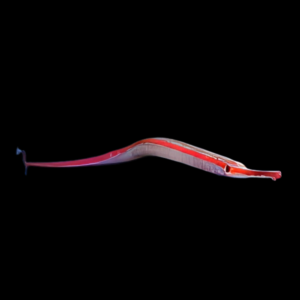
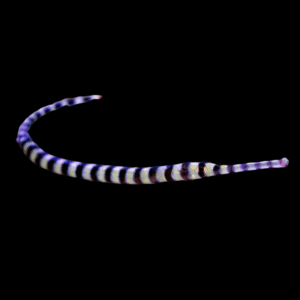
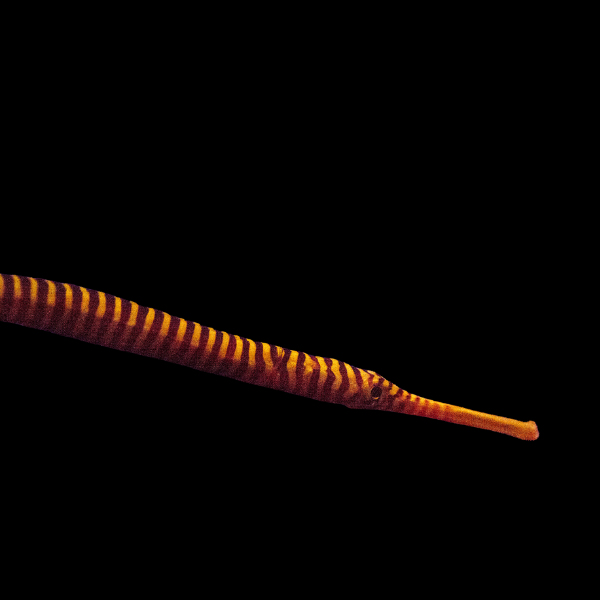
The Candy Pipefish is one of the most visually stunning members of the pipefish family (Syngnathidae), easily identified by its alternating yellow and red bands and slender, snake-like body. Reaching up to 18–20 cm (7–8 inches) in length, it is graceful and delicate, gliding among coral branches and rockwork in search of tiny prey. Closely related to seahorses, this species requires a peaceful, mature reef environment with a constant supply of live microfauna.
Origin
Native to the Indo-Pacific region, including Indonesia, the Philippines, Papua New Guinea, and the Great Barrier Reef. Found in lagoons and coral reefs, often under ledges or within caves and crevices.
Feeding
The Candy Pipefish is a micro-carnivore with specialised feeding requirements. In the wild, it feeds on tiny crustaceans such as copepods, amphipods, and other planktonic organisms. In captivity, it must have access to live food sources or a well-established refugium. Diet includes:
-
Live copepods and amphipods (essential)
-
Live enriched baby brine shrimp (supplemental)
-
Frozen cyclops and mysis shrimp (for trained individuals)
-
Frequent small live feedings throughout the day
Feed 2–3 times daily to ensure proper nutrition.
Tank Mates
Extremely peaceful and best suited to calm, non-aggressive reef tanks. Ideal tank mates include:
-
Seahorses and other pipefish
-
Gobies and blennies
-
Firefish, cardinalfish, and small reef-safe wrasses (non-competitive feeders)
-
Peaceful invertebrates (snails, hermits, cleaner shrimp)
Avoid fast or aggressive species that may outcompete them for food, such as tangs, triggers, or dottybacks.
Aggression
Completely peaceful. Males may display brief territorial posturing, but serious aggression is rare. Can be kept as a mated pair or small group in larger, mature systems.
Experience Level
Advanced. The Candy Pipefish requires stable, pristine water conditions, gentle water flow, and a constant source of live foods. It is sensitive to stress, poor water quality, and competition at feeding time.
Water Parameters
-
Temperature: 24–27°C (75–81°F)
-
pH: 8.1–8.4
-
Salinity: 1.022–1.025 SG
-
Hardness (dKH): 8–12
-
Tank Size: Minimum 75 gallons (280L) for a pair; larger aquariums preferred for groups
Provide plenty of live rock, caves, and branching coral for shelter, with gentle to moderate water flow.
Reef Compatibility
Reef safe. Will not harm corals or invertebrates, and thrives in peaceful reef systems with refugiums that maintain a healthy copepod population.